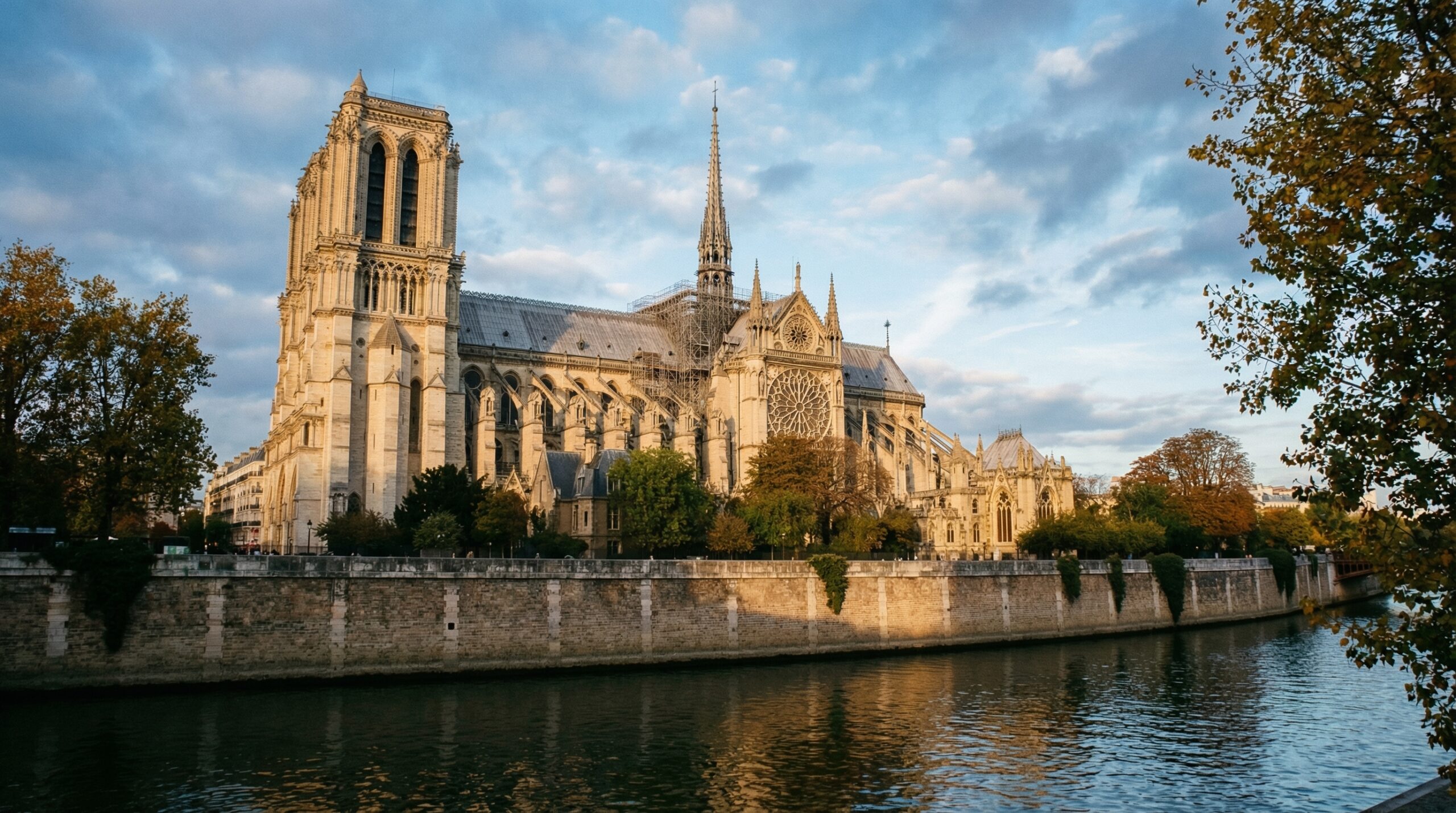
When you look at Notre Dame today, you might see a single, unified building. However, history reveals a construction project that spanned nearly two centuries—a timeframe that is difficult for modern minds to grasp. While we build skyscrapers in just a few years, Notre Dame required 182 years of dedication. Generations of workers spent their entire lives cutting stone for a masterpiece they knew they would never see finished.
The Vision of 1163
The story begins in the 12th century when Paris was rapidly evolving into the capital of France. Because the existing cathedral, Saint-Étienne, had become too small and old-fashioned, the Bishop of Paris, Maurice de Sully, envisioned a monument that reflected the groundbreaking new Gothic style.
In 1163, the first stone was laid in a ceremony attended by Pope Alexander III and supported by King Louis VII. Their ambition was massive: they intended to build the tallest church in the world.
The Phases of Construction
Because you cannot build a stone mountain overnight, the construction occurred in specific, logical phases:
- 1163–1182 (The Choir): Builders finished the eastern end first so that priests could hold Mass while the rest of the cathedral rose around them.
- 1182–1200 (The Nave): This phase focused on the main body of the church for the congregation.
- 1200–1225 (The Western Façade): Work moved to the front of the building, including the two iconic towers.
- 1225–1250: The upper towers and the intricate Rose Windows were completed.
- 1250–1345 (The Finishing Touches): During the final century of work, architects added the chapels, flying buttresses, and interior decorations.
Ultimately, the cathedral was officially considered “finished” in 1345.
Why Did It Take So Long?
Money and technology were the primary hurdles throughout the process. Since construction relied heavily on donations, work often stopped for years whenever funds ran out. Consequently, Bishop de Sully died long before the roof was even installed.
If you look closely at the stonework, you can see how the architects changed over time. While the lower levels reflect the sturdiness of Early Gothic design, the upper levels demonstrate the elegance and refinement of the High Gothic style.
A Survivor Through the Centuries
Even after 1345, the building never stayed frozen in time. Every century left a unique mark on its walls:
- The 1700s: Kings Louis XIV and XV modernized the interior, unfortunately destroying some medieval stained glass to let in more light.
- The Revolution (1790s): Revolutionaries ransacked the building, beheaded the statues on the façade, and melted the bells for cannons.
- The Restoration (1844–1864): Architect Eugène Viollet-le-Duc saved the crumbling building, restoring the statues and building the famous spire.
🗓️ Key Dates to Remember
- 1163: Construction begins.
- 1345: Construction is officially completed.
- 1804: Napoleon is crowned Emperor inside the nave.
- 2019: The Great Fire destroys the roof and spire.
- 2024: The grand reopening following the restoration.
When you touch the stones of Notre Dame, you are touching the work of medieval masons who relied solely on geometry and faith. That enduring craftsmanship is the real history of the cathedral.
Leave a Reply