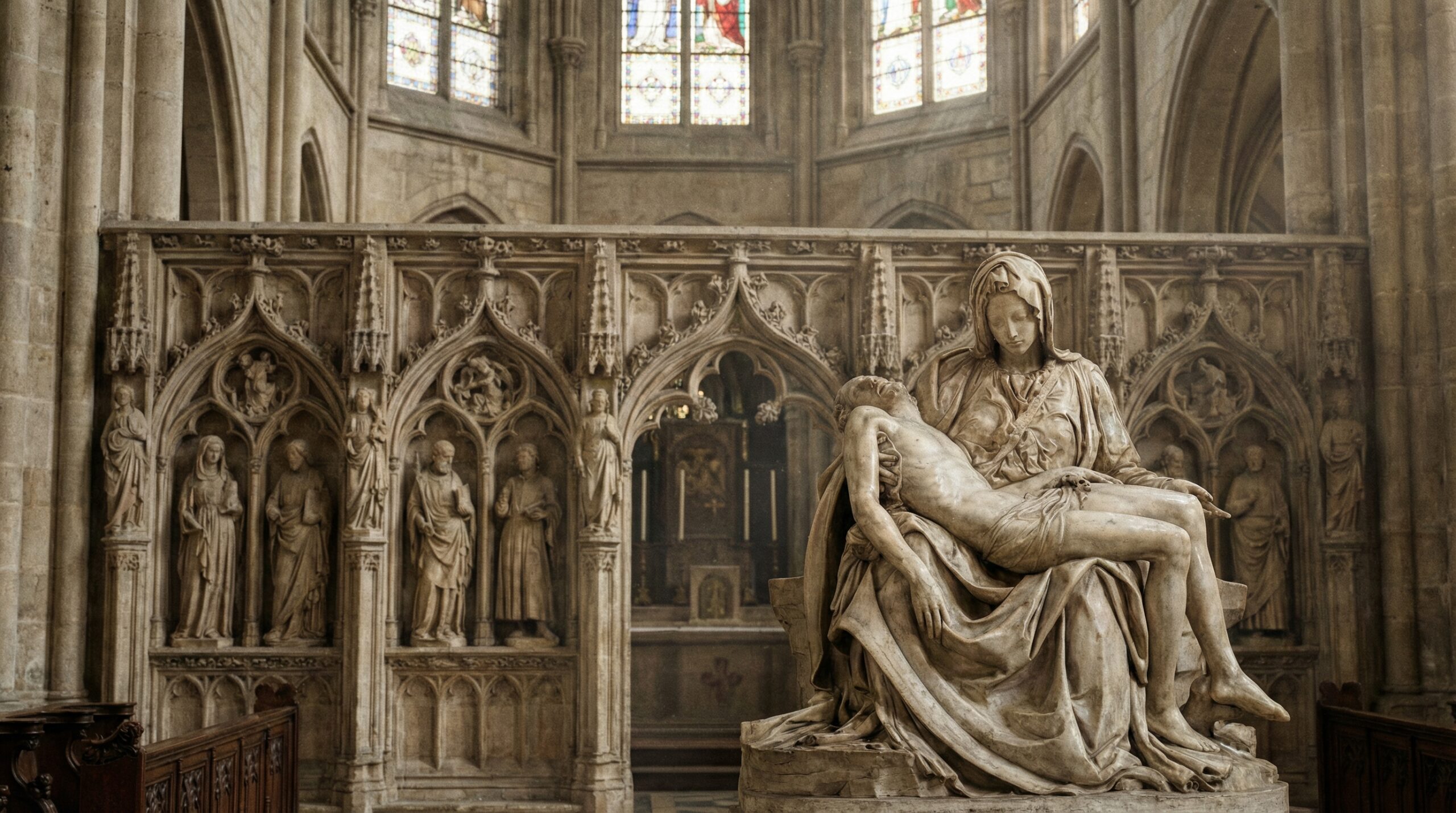
While paintings may fade and glass may break, the stone sculptures of Notre-Dame endure as some of the most significant artistic treasures in France. These works range from medieval storytelling to royal propaganda. However, you must know where to look because the best sculpture is often hidden behind the altar or along the ambulatory walls.
The Choir Screen (The Jubé)
This 14th-century stone wall separates the priests’ choir from the public ambulatory. Because it depicts the life of Christ in such vivid detail, it essentially serves as a “medieval comic book”.
- North Side: This specific section illustrates the childhood and early ministry of Jesus.
- South Side: These detailed carvings show the various appearances of Christ following the Resurrection.
- Original Colors: Recent restorations have revealed that these statues were originally brightly painted in vibrant reds, blues, and golds. As a result, we know medieval statues were not plain white.
The Pieta and Royal History
A massive marble “Pieta” by Nicolas Coustou stands behind the main altar. This masterpiece shows the Virgin Mary holding the dead body of Jesus. Furthermore, the statue is historically significant because it is flanked by two kneeling kings:
- Louis XIII: He is depicted offering his royal crown to Mary.
- Louis XIV: He is shown nearby in a solemn pose of prayer.
According to history, King Louis XIII vowed to renovate the choir if he were granted an heir. Consequently, the birth of Louis XIV led to the creation of this Baroque sculpture as the ultimate fulfillment of that promise.
Sacred Wood and Medieval Survival
Beyond the stone work, the cathedral houses exquisite wooden and free-standing sculptures that have survived for centuries.
- The Wooden Stalls: These oak choir seats feature thousands of tiny figures depicting scenes from the life of the Virgin Mary. Remarkably, these stalls remained largely protected during the 2019 fire.
- The Virgin of Paris: This slender 14th-century statue of Mary stands in the nave. It remains the most sacred image in the building because it survived both the French Revolution and the recent fire.
Leave a Reply