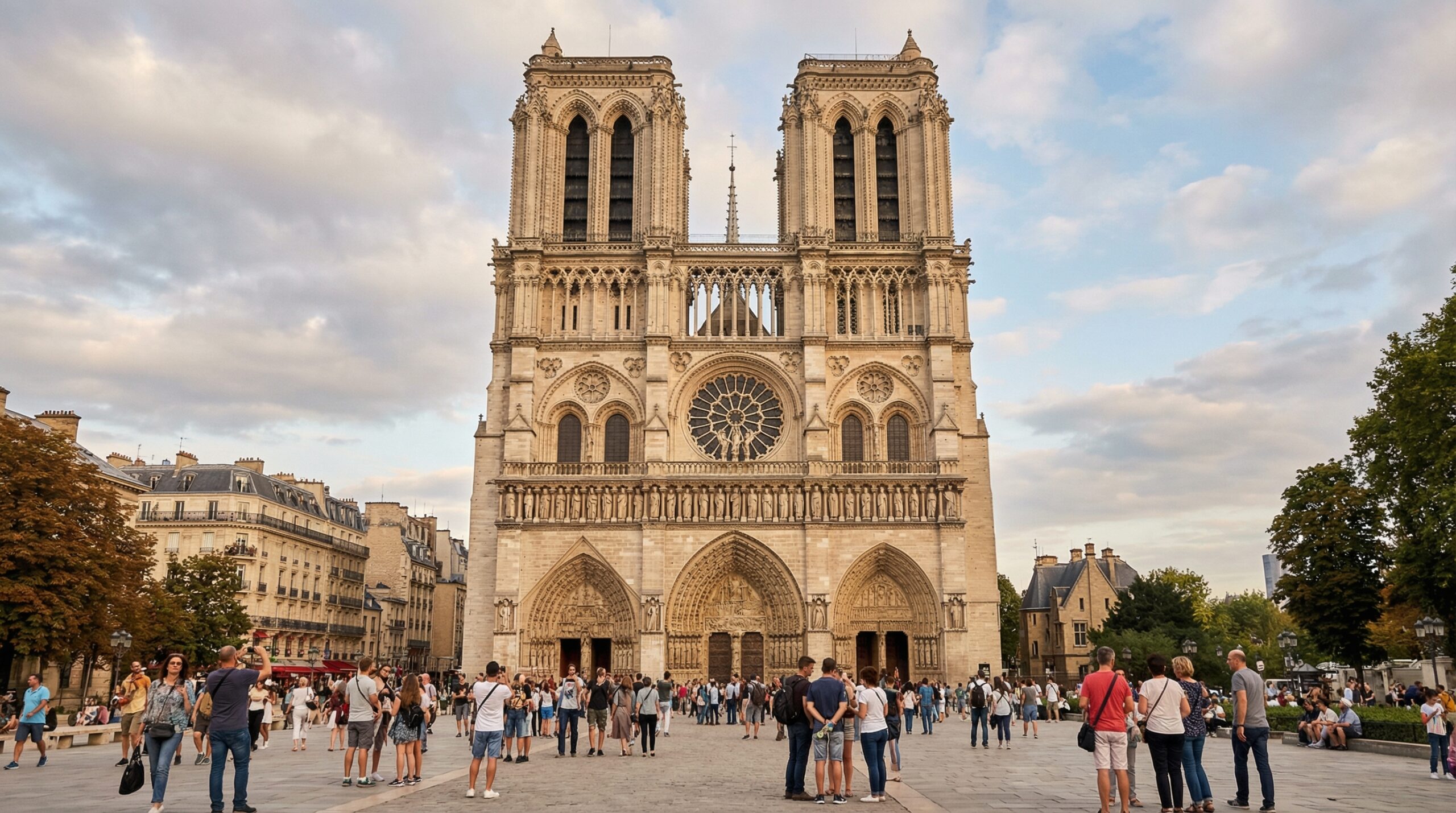
The tragic events of April 15, 2019, caused the world to stand still as smoke billowed from the Île de la Cité. Although the iconic spire snapped and collapsed into the burning roof, many people’s fears that this was the end proved unfounded. Today, in 2026, the cathedral is open once again, appearing cleaner, stronger, and more vibrant than it has in centuries.
The Night of the Fire
The blaze originated in the attic, a space known as “The Forest” because it contained thousands of oak beams dating back to the 1200s. Because the ancient wood was so dry, the fire spread instantly.
During the crisis, firefighters made a critical decision to abandon the roof and focus their efforts on saving the two main towers. They realized that if the heavy bells in the North Tower fell, the resulting weight would pull the entire structure down. Ultimately, they succeeded in saving the cathedral’s structural integrity.
Assessing the Damage
The morning after the disaster, the extent of the destruction was painfully clear:
- The Spire: It was completely gone.
- The Roof: This part of the structure was entirely destroyed.
- The Vault: Multiple holes were punched through the stone ceiling by falling debris.
- Lead Contamination: The melting lead roof coated the interior in toxic dust.
The Restoration: Traditional vs. Modern
Following the fire, a heated debate erupted regarding the cathedral’s future. While some architects proposed modern glass roofs or laser spires, President Emmanuel Macron eventually decided on a respectful path of authenticity. Consequently, the cathedral was rebuilt exactly as it was prior to the fire.
A Massive Logistical Operation
The restoration process required unprecedented levels of coordination and craftsmanship:
- The Safety Phase: It took two years just to secure the building and remove the melted scaffolding that had fused together during the fire.
- Deep Cleaning: Specialists utilized a latex paste to lift lead dust from the walls, revealing the stone’s original blonde color and making the interior shockingly bright.
- Authentic Carpentry: France harvested 2,000 oak trees for the project. Carpenters used medieval axes to hand-hew the beams, recreating “The Forest” using the same techniques as the original 13th-century builders.
- The New Spire: A meticulous replica of Viollet-le-Duc’s 19th-century spire was installed and topped with a new golden rooster.
Notre Dame in 2026
If you visit the cathedral today, you will witness a transformed monument. The once-gloomy interior is gone, replaced by cleaned stone that beautifully reflects light from the restored stained glass. While the new spire looks identical to its predecessor, the surrounding forecourt is being redesigned to include more greenery and better access to the archaeological crypt.
Since reopening in December 2024, the cathedral has resumed daily mass and welcomed back millions of tourists. Ultimately, the restoration of Notre Dame serves as a reminder that while heritage is fragile, it can be preserved through modern heroism and ancient craft.
Leave a Reply