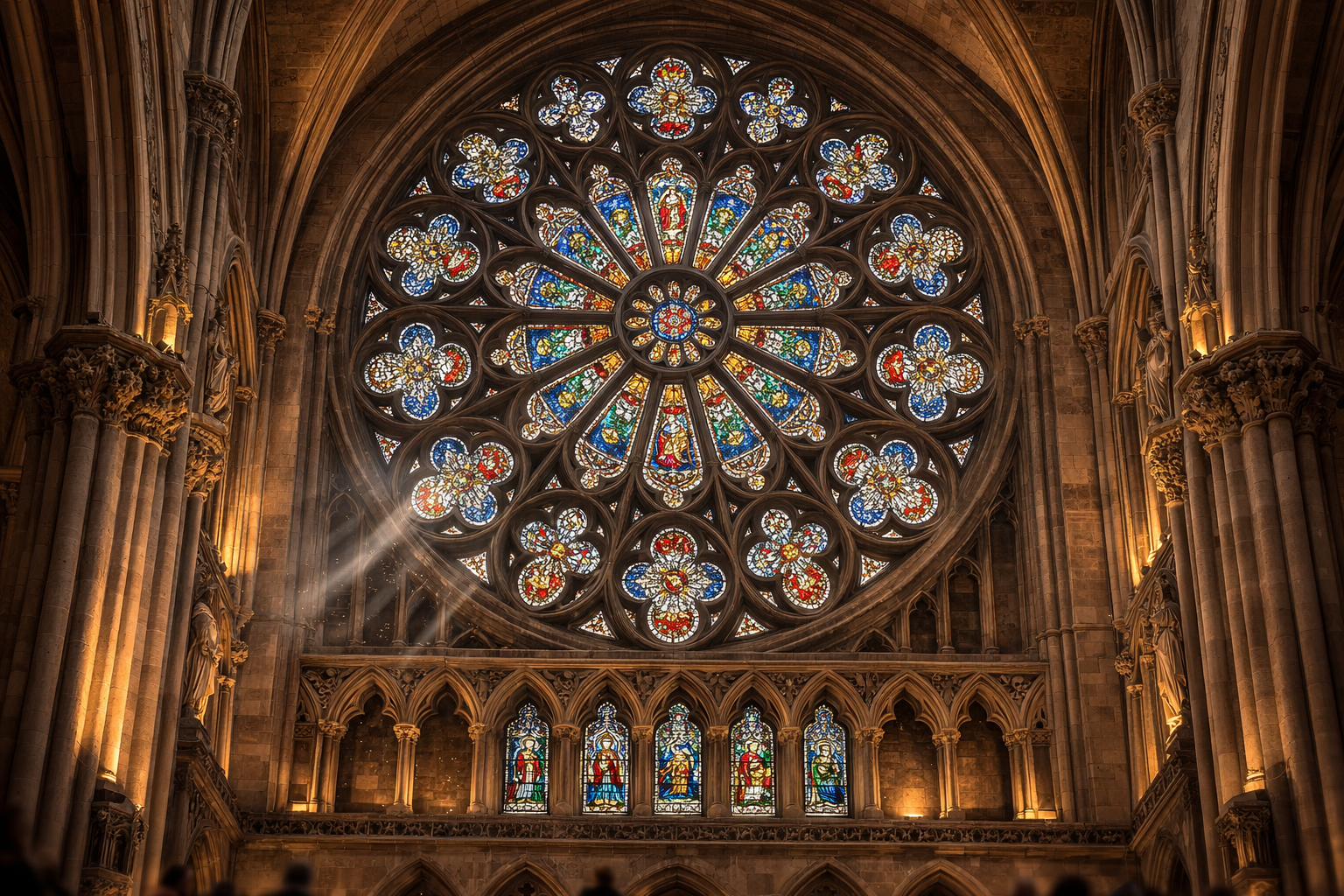
A “Rose Window” is far more than just a circular stained glass feature; it is a masterpiece of light divided into segments by stone mullions and tracery. Resembling a flower in full bloom, the three rose windows of Notre Dame de Paris are among the most famous in the world.
These are not merely pretty pictures, however. They represent complex structural feats—massive holes cut into solid stone walls that must sustain tons of atmospheric and structural pressure.
The West Rose (1225): The Pioneer
Situated above the main entrance, the West Rose is the oldest of the trio.
- Size: 9.6 meters in diameter.
- Structure: Because the architects were still cautious in the early 13th century, the stone grid is notably “chunky.” This thickness ensured the wall would not collapse under the weight of the towers.
- The Glass: Interestingly, almost none of the original 13th-century glass remains here, as most was replaced during the 19th-century restoration.
The North Rose (1250): The Blue Treasure
Because this window faces the dark, cold side of the building, it rarely receives direct sunlight.
- The Glass: This window is a true medieval treasure, retaining much of its original 13th-century glass.
- The Color: The predominant color is blue, a deliberate choice that allows the glass to glow with a cool, ambient light even on cloudy days.
- Subject: It depicts the Old Testament, featuring prophets, kings, and high priests surrounding the Virgin Mary.
The South Rose (1260): The Delicate Giant
Facing the river and the sun, the South Rose demonstrates how quickly medieval technology advanced.
- Structure: Unlike the heavy West Rose, the stone tracery here is delicate and lace-like.
- The Alignment: During the 19th century, architects realized the wall was leaning dangerously. Consequently, they had to rotate the entire window slightly to fix the structural alignment.
- The Glass: Over the centuries, storms and revolutions have damaged this glass, leading to multiple rounds of replacement.
Engineering the Void
Cutting a 13-meter hole into a load-bearing wall is a dangerous architectural gamble. To solve this, the builders framed the circles in squares of thick stone, using the weight of the surrounding masonry to “lock” the window in place.
While the fire of 2019 terrified art historians—fearing the lead would melt or the thermal shock of fire hoses would shatter the glass—all three windows miraculously survived.
Divine Symbolism
In the medieval mind, the circle represented the infinite: a shape with no beginning and no end, symbolizing God. When sunlight hits the glass, it transforms white light into a rainbow of colors. This transition was meant to represent the divine spirit entering and illuminating the hearts of the faithful.
Leave a Reply