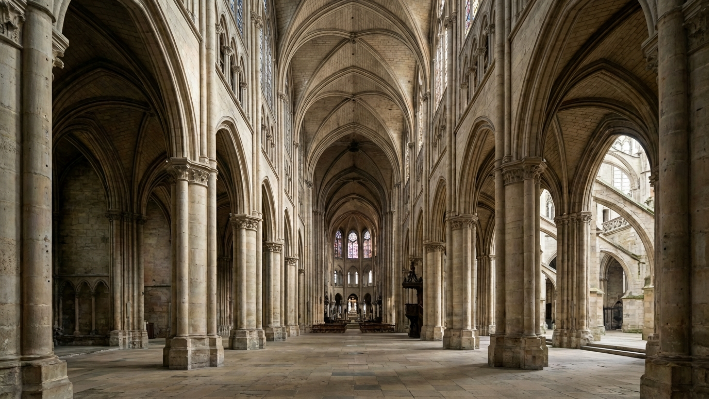
Building a cathedral is like following a complex recipe. If you get the ingredients wrong, the entire structure may collapse. Consequently, the builders of Notre-Dame used three primary materials: stone, wood, and lead. Understanding these specific materials explains why the building remains standing after more than 850 years.
Lutetian Limestone: The Foundation of Paris
Paris is literally built from its own ground. The city sits on a massive bed of limestone known as “Lutetian Limestone.” Because the builders used this local resource, the cathedral features several unique characteristics:
- Source: Workers quarried the stone for Notre-Dame from tunnels directly under Paris, which now form the Catacombs.
- Quality: This warm, yellow-grey stone is relatively soft when you first cut it. Therefore, artists found it remarkably easy to carve into intricate shapes.
- The Result: Once exposed to the air, the stone hardens significantly. This unique property allowed for the detailed carvings of gargoyles and saints that you see today. While durable, this limestone remains vulnerable to modern pollution.
“The Forest”: The Massive Oak Roof Structure
The original roof structure earned the nickname “The Forest” (La Forêt). Because it required an immense amount of timber, the scale of this project was unprecedented for its time.
- Source: Builders sourced the wood from the vast medieval forests surrounding Paris.
- Scale: Ultimately, the construction required over 1,000 mature oak trees.
- Engineering: Since oak is both strong and flexible, it can bend in high winds without snapping. This flexibility was essential for supporting the heavy lead roof.
When the fire destroyed the roof in 2019, the dense, ancient oak wood created intense heat. However, the decision to rebuild the roof using new oak ensures that the building retains its original structural flexibility.
The Protective Lead Skin of the Roof
Unlike many other historic buildings, the roof of Notre-Dame does not consist of slate or tile. Instead, the builders used heavy lead sheets to protect the interior.
- Weight: The original lead roof weighed an impressive 200 tons.
- Purpose: Because lead is waterproof and malleable, it seals the building perfectly against the rain.
- The Impact of the Fire: Lead has a low melting point, so the roof melted during the 2019 fire. This created a toxic yellow smoke that spread lead dust across the city, requiring a massive decontamination effort during the restoration.
Iron: The Secret Skeleton Within the Stone
Recent studies during the restoration revealed a surprising secret. Notably, Notre-Dame used iron staples to hold the stones together.
It is the first Gothic cathedral to use iron as a primary construction material. The builders poured molten lead into the stone joints to secure these iron clamps, which helped the thin walls resist strong winds.
Summary of Materials
- Stone provides the necessary height.
- Wood provides the structural cover.
- Lead provides the waterproof seal.
- Iron provides the essential grip.
The true genius of Notre-Dame lies in its chemistry as much as its art. Because the builders understood their materials perfectly, they created a structure capable of surviving fire, war, and time.
Leave a Reply