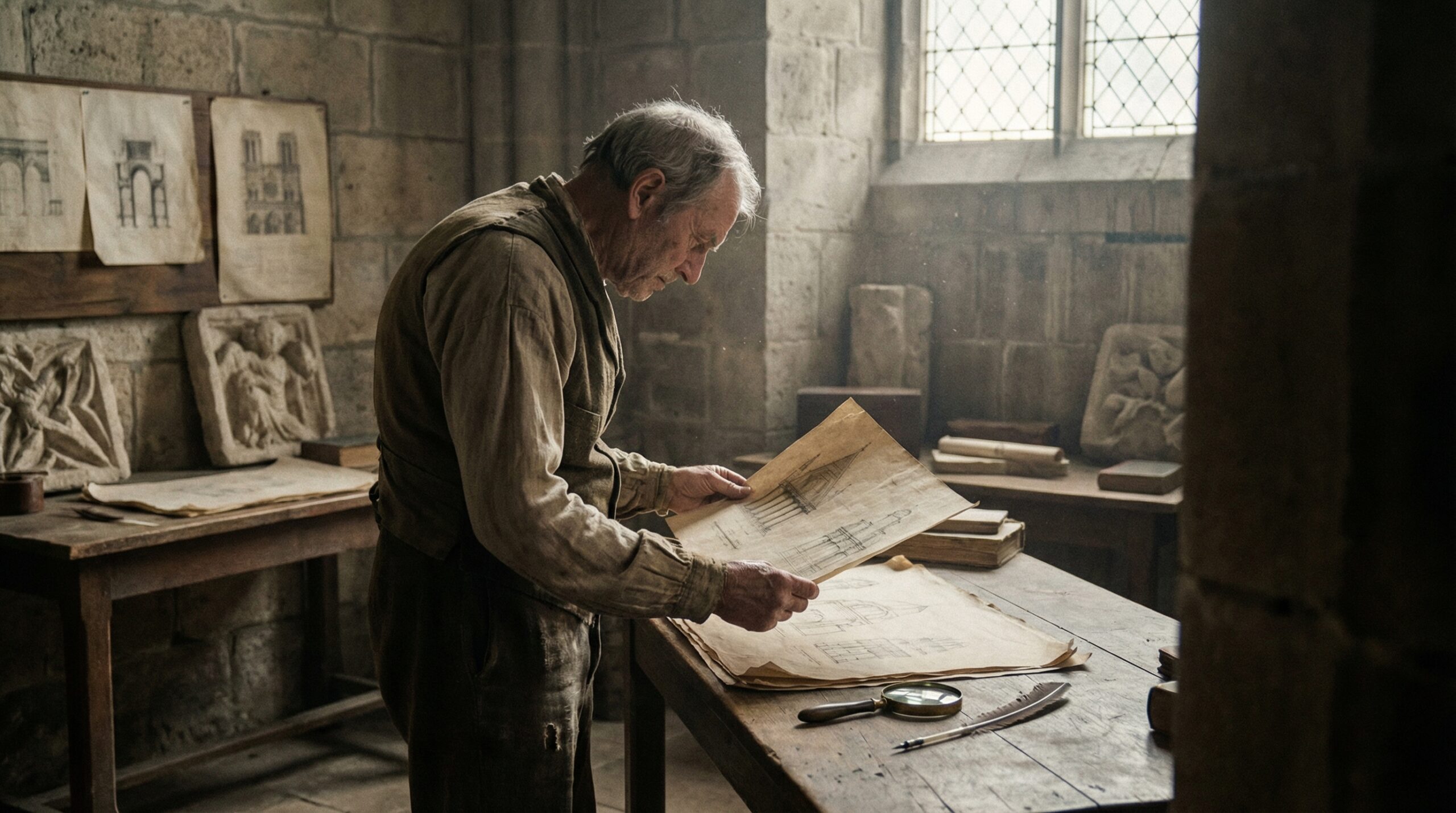
While the famous Disney adaptation features singing gargoyles and a happy ending, the true history of The Hunchback of Notre Dame is significantly darker. More importantly, Victor Hugo did not write this story merely to entertain; instead, he authored it as a specific tool to save a dying building.
The Cathedral in Decay
In the early 1800s, Notre Dame was falling apart. Because the stained glass was broken and the walls were crumbling, city officials in Paris actually considered tearing it down to repurpose the stone for bridges.
Enter Victor Hugo
Victor Hugo, a young writer with a deep love for medieval architecture, hated how Paris was destroying its history. Consequently, he decided to write a massive blockbuster novel to force the public to care about the cathedral. When he published Notre-Dame de Paris in 1831, he made the cathedral the main character rather than just a setting.
The Plot: The Original Tragedy
Unlike the movies, the original book is a devastating tragedy:
- Quasimodo: A deaf, deformed bell ringer who finds sanctuary in the cathedral.
- Esmeralda: A beautiful dancer who is framed for a crime.
- Frollo: An archdeacon obsessed with Esmeralda who ultimately causes her death.
In Hugo’s version, Esmeralda is hanged, and Quasimodo kills Frollo by throwing him off a tower. Ultimately, Quasimodo dies holding Esmeralda’s corpse in her grave. Years later, when their locked skeletons are discovered, the bones turn to dust the moment someone tries to separate them.
Did a Real Quasimodo Exist?
While Quasimodo is a fictional character, he may have been inspired by reality. Historians recently discovered a memoir by Henry Sibson, a British sculptor who worked at the cathedral in the 1820s. He specifically mentioned a solitary “humpbacked stone carver” on the project, whom Hugo likely met and used as inspiration.
The Impact of the Novel
Hugo’s plan worked perfectly. Because the book became a sensation, Parisians began to view the crumbling cathedral as a romantic symbol of their city. This public outcry finally forced the government to act; in 1844, King Louis-Philippe ordered a massive restoration led by architect Eugène Viollet-le-Duc.
Viollet-le-Duc’s “Romantic” Restoration
Viollet-le-Duc was a fan of Hugo and added several elements that matched the “vibe” of the book rather than original medieval history:
- The Chimeras: These famous monsters on the balcony were not medieval; instead, they were added because they fit the gothic atmosphere Hugo described.
- The Spire: He constructed the tall spire that defined the skyline until it collapsed in 2019.
Summary
Without Victor Hugo’s imagination, Notre Dame would likely not exist today. This story serves as a testament to the power of art to change reality. When you look at the gargoyles today, you are looking at Hugo’s vision carved in stone.


Leave a Reply