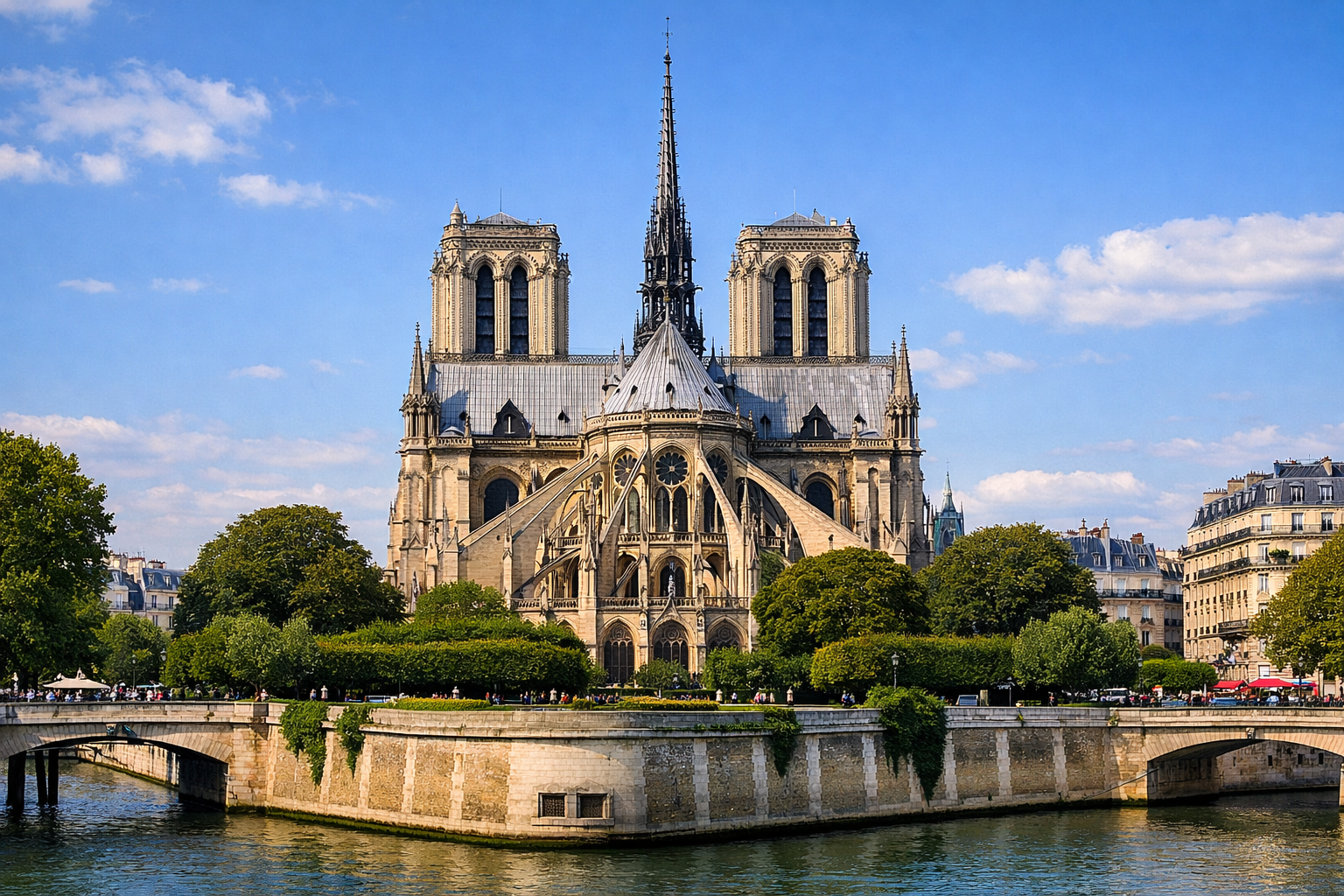
Notre-Dame de Paris is much more than just a building. Instead, it serves as the geographic and spiritual center of France. Located on the Île de la Cité, which is a natural island in the Seine River, the cathedral dominates the city’s skyline. For over 850 years, this massive structure has watched over the city.
When people ask what Notre-Dame is, the answer includes history, religion, and architectural genius. Specifically, it is a masterpiece of French Gothic architecture. Furthermore, it has survived numerous wars, revolutions, and a major fire.
A Journey Through Centuries of Construction
The cathedral’s construction originally began in 1163. During that year, King Louis VII and Pope Alexander III together laid the cornerstone. Because the city wanted a structure that reflected its growing wealth and power, the ambition behind the project was massive.
Ultimately, it took nearly two centuries to finish the work. Consequently, different architects worked on the project over many years. Although this resulted in a blend of various styles, the cathedral remains distinctly Gothic. Finally, builders largely completed the structure by 1345, and it has stood on that island ever since.
Masterpieces of Gothic Architectural Innovation
Notably, Notre-Dame changed how people built churches. For example, it was one of the first buildings to use flying buttresses. These arched stone supports are visible on the outside of the building. However, they are not merely for decoration. Instead, they actively hold up the walls.
Because the cathedral is so tall, the walls would likely collapse outward without these supports. Therefore, the buttresses allowed architects to build higher and include massive, intricate stained-glass windows.
The Significance of “Our Lady”
The name “Notre-Dame” translates to “Our Lady” in French. Consequently, the builders dedicated the cathedral to the Virgin Mary. While this is a common name for churches across France, most people simply mean the Paris location when they say “Notre-Dame” without a specific city name.
A Landmark Witnessing Global History
Throughout its long life, several major historical events happened within these walls:
- 1431: In this year, Henry VI of England was crowned King of France.
- 1804: Later, Napoleon Bonaparte crowned himself Emperor here.
- 1944: Following the Liberation of Paris, the city celebrated with a mass at the cathedral.
- 2019: Recently, a devastating fire destroyed the roof and spire.
- 2024: Fortunately, the cathedral reopened to the world this year.
Sacred Treasures and Musical Power
The cathedral also houses important Christian relics. Most famously, it contains the Crown of Thorns. Believers say this is the wreath placed on the head of Jesus during the crucifixion. Additionally, the interior contains the Great Organ. This instrument features roughly 8,000 pipes, making it one of the most powerful musical instruments in the world.
The Living Cathedral and Point Zero
Today, Notre-Dame attracts approximately 12 to 13 million visitors every year. Because entry is free, it remains a popular destination for both tourists and worshippers. Moreover, it continues to function as a Catholic church where priests hold mass daily.
Ultimately, the building represents the endurance of Paris. Although the 2019 fire shocked the world, the subsequent restoration proved the resilience of French craftsmanship. When you visit today, you see a building that refused to die.
Quick Facts and Dimensions:
- Length: 128 meters (420 ft).
- Width: 48 meters (157 ft).
- Towers Height: 69 meters (226 ft).
- Spire Height: 96 meters (315 ft).
Finally, Notre-Dame sits at the literal starting point of the country. Officials measure all distances in France from the “Point Zero” marker located in its square.
Leave a Reply